


India has a rich history of mathematics, dating back to ancient times. Indian mathematicians have made groundbreaking contributions in fields such as algebra, geometry, number theory, and applied mathematics. From the invention of zero to modern computational advancements, these mathematicians have shaped the way the world understands numbers.
This article explores the top 10 mathematicians of India, their significant contributions, and their impact on global mathematical development.
Aryabhata (476 CE – 550 CE)
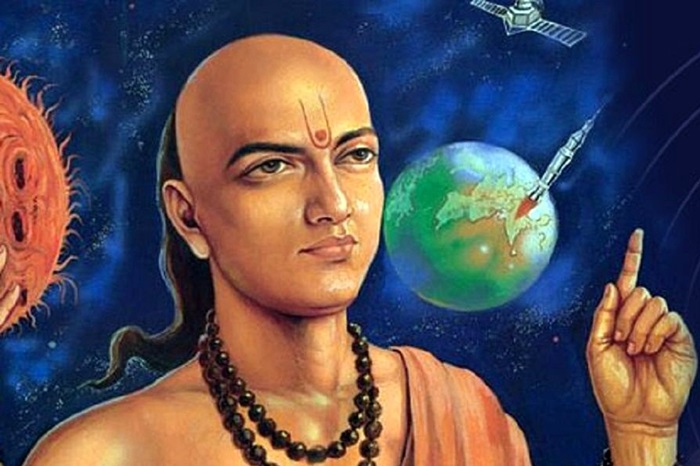
Aryabhata is one of the earliest known Indian mathematicians and astronomers. His work, Aryabhatiya, laid the foundation for many mathematical principles.
Major Contributions:
- Introduced the concept of zero in mathematical calculations
- Developed the place-value system
- Provided accurate approximations for pi (π)
- Introduced trigonometric functions such as sine and cosine
Aryabhata’s revolutionary methods in astronomy and mathematics influenced scholars in India and the Islamic world.
Brahmagupta (598 CE – 668 CE)
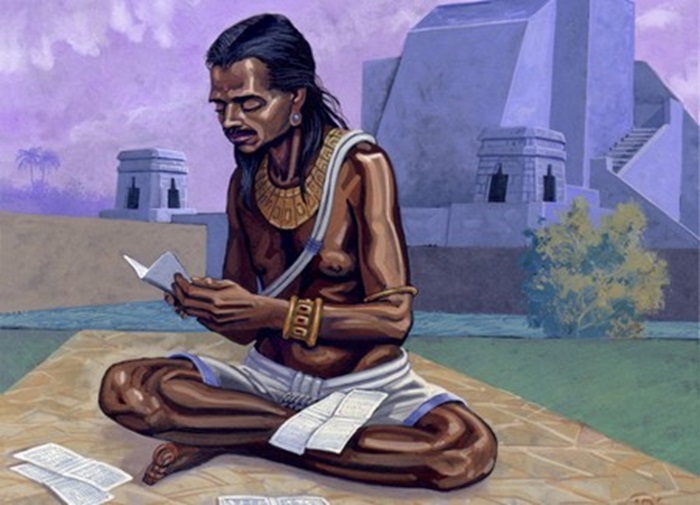
Brahmagupta was a pioneering Indian mathematician who further developed the concept of zero and worked on quadratic equations.
Major Contributions:
- Defined zero as a number and established rules for its arithmetic operations
- Developed methods to solve quadratic equations
- Introduced negative numbers in mathematical equations
- Worked extensively on number theory and geometry
His book, Brahmasphutasiddhanta, became an essential text for mathematicians in India and beyond.
Bhaskara I (600 CE – 680 CE)
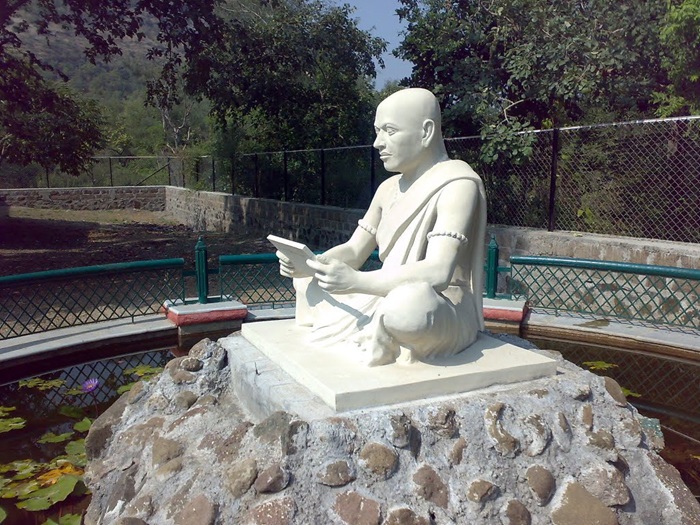
Bhaskara I was an important mathematician who expanded on Aryabhata’s work and made contributions to number theory and algebra.
Major Contributions:
- Improved the approximation of pi (π)
- Worked on accurate calculations for planetary motion
- Developed new methods for solving mathematical equations
His commentaries on Aryabhata’s work helped preserve and enhance early mathematical theories.
Bhaskara II (1114 CE – 1185 CE)

Bhaskara II, also known as Bhaskaracharya, was one of the greatest mathematicians of medieval India. His book, Lilavati, remains a significant mathematical text.
Major Contributions:
- Developed the concept of differential calculus before Newton and Leibniz
- Introduced solutions for quadratic and cubic equations
- Worked on continued fractions and permutation-combination
- Made significant contributions to algebra, arithmetic, and geometry
Bhaskara II’s work influenced future generations of mathematicians and was later studied by European scholars.
Madhava of Sangamagrama (1340 CE – 1425 CE)
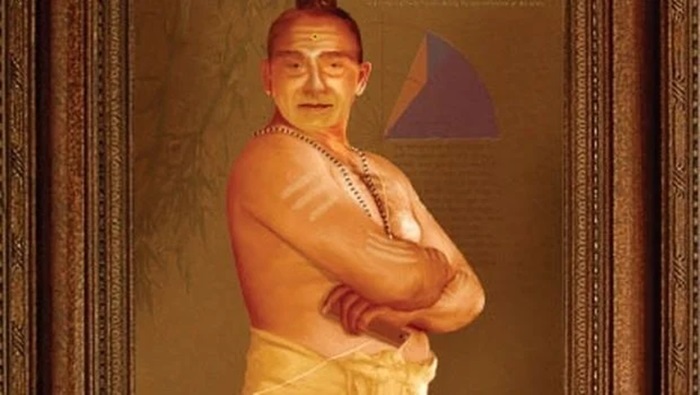
Madhava is known as the founder of the Kerala School of Mathematics. He introduced several important mathematical concepts centuries before they were discovered in Europe.
Major Contributions:
- Developed the infinite series for trigonometric functions
- Provided a more accurate approximation of pi (π)
- Introduced calculus-like methods in mathematical calculations
- Made advancements in algebra and trigonometry
His work laid the foundation for modern calculus, influencing European mathematicians like Newton and Leibniz.
Srinivasa Ramanujan (1887 – 1920)
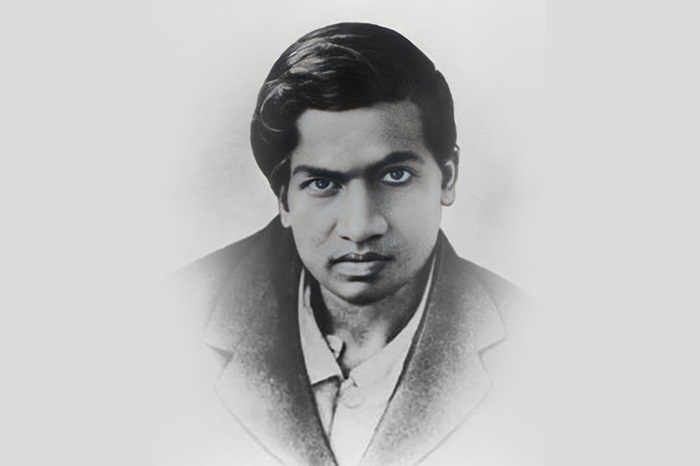
Srinivasa Ramanujan is one of the most famous Indian mathematicians, known for his extraordinary intuition and groundbreaking discoveries in number theory.
Major Contributions:
- Discovered thousands of mathematical formulas, including the Ramanujan Prime and Ramanujan Theta Function
- Worked on infinite series, modular functions, and partition theory
- Collaborated with British mathematician G.H. Hardy, producing revolutionary work in pure mathematics
- His findings continue to influence modern mathematics, including cryptography and physics
Despite having no formal training, Ramanujan’s genius remains unmatched, and his contributions continue to inspire mathematicians worldwide.
P.C. Mahalanobis (1893 – 1972)

P.C. Mahalanobis was a pioneering Indian statistician who played a key role in modern statistical methods and economic planning.
Major Contributions:
- Developed the Mahalanobis Distance, widely used in cluster analysis and pattern recognition
- Established the Indian Statistical Institute
- Played a crucial role in India’s economic planning and development
- Advanced statistical methods for agricultural and industrial development
His contributions to applied statistics made significant impacts in the fields of economics and social sciences.
C.R. Rao (1920 – 2023)
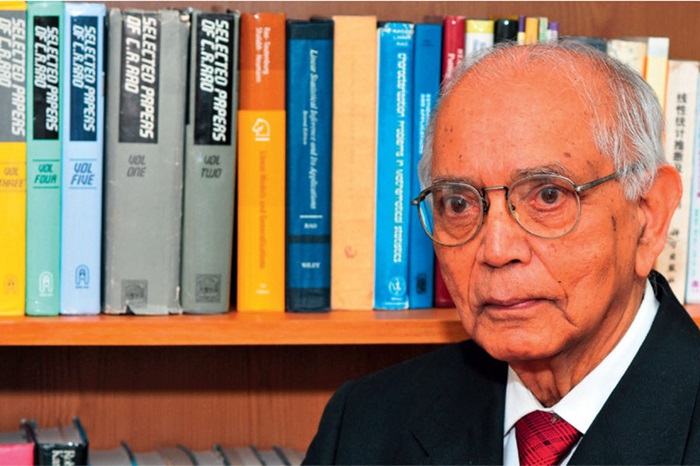
Calyampudi Radhakrishna Rao, known as C.R. Rao, was one of the most influential statisticians of the 20th century.
Major Contributions:
- Developed the Cramer-Rao bound and Rao-Blackwell theorem, essential in statistical inference
- Contributed to multivariate analysis and statistical genetics
- Worked on mathematical modeling and optimization
- Received numerous international honors for his statistical research
His work has been widely applied in genetics, economics, and artificial intelligence.
Harish-Chandra (1923 – 1983)
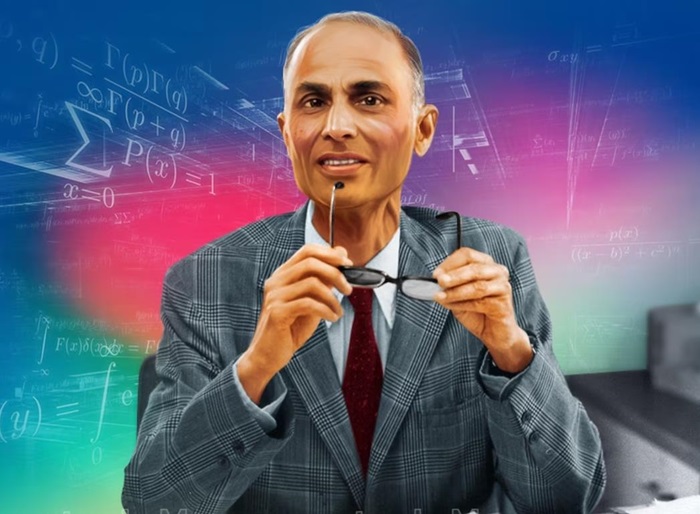
Harish-Chandra was an Indian-American mathematician and physicist known for his work in representation theory and harmonic analysis.
Major Contributions:
- Made fundamental contributions to Lie groups and representation theory
- Developed Harish-Chandra’s character formula, widely used in modern mathematics
- Advanced theoretical physics through mathematical frameworks
- His research influenced algebra, quantum mechanics, and geometry
Harish-Chandra’s discoveries continue to be applied in modern physics and mathematics.
Manjul Bhargava (Born 1974)
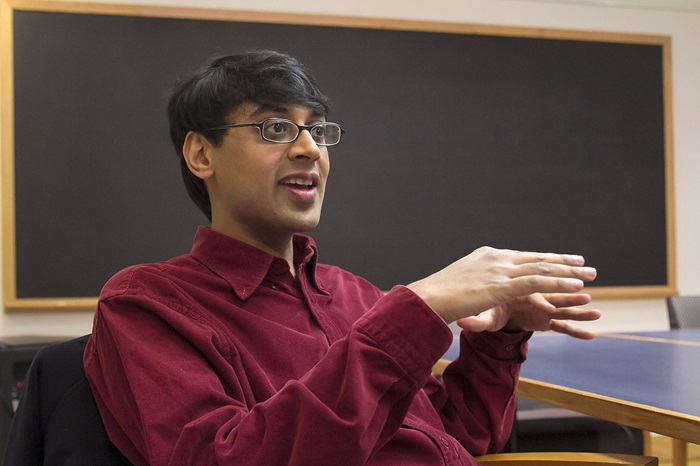
Manjul Bhargava is an Indian-American mathematician known for his groundbreaking work in number theory.
Major Contributions:
- Discovered new formulas for quadratic and cubic equations
- Introduced novel methods for solving classical number theory problems
- Awarded the Fields Medal in 2014, one of the highest honors in mathematics
- His research has improved mathematical cryptography and algorithmic number theory
Bhargava’s contributions have modernized number theory, making complex problems more accessible for future generations.
Frequently Asked Questions (FAQs)
1. Who is the greatest mathematician of India?
Srinivasa Ramanujan is often regarded as the greatest Indian mathematician due to his groundbreaking discoveries in number theory.
2. Who invented zero in mathematics?
Aryabhata and Brahmagupta are credited with developing the concept and mathematical use of zero.
3. What was Ramanujan famous for?
Ramanujan is known for his discoveries in number theory, including infinite series, modular functions, and partition theory.
4. Who is the first Indian mathematician?
Aryabhata is considered the first well-documented Indian mathematician, with significant contributions to algebra and trigonometry.
5. Who won the Fields Medal from India?
Manjul Bhargava received the Fields Medal in 2014 for his contributions to number theory.
Final Thoughts
India has produced some of the greatest mathematicians in history, influencing both ancient and modern mathematical advancements. From foundational concepts like zero to modern cryptography, their work continues to shape the world of mathematics. The contributions of these brilliant minds have had a lasting impact on science, technology, and education.